
Eat. Shop. Explore. Exit 254.
Historic West Branch, Iowa
(319) 643-7100


Historic Downtown Walking Tour
Welcome to Historic West Branch, Iowa, the hometown of America's 31st President! Just a few steps north of the Herbert Hoover National Historic Site, you'll discover one of Iowa's most significant historic commercial districts, where more than 150 years of history, architecture, and community come together.
In 1987, the U.S. Department of the Interior designated 14 downtown buildings as the West Branch Commercial District and placed them on the National Register of Historic Places. Two additional buildings were added in 1990 and 1995, bringing the district to 16 historic landmarks. Together, they tell the story of West Branch's evolution from a small collection of wooden storefronts into a thriving commercial center during the golden age of American agriculture.
Each stop on this tour shares the unique story of a historic building through photographs, architectural details, and fascinating stories from the past. Whether you're walking the streets of downtown or exploring from home, we invite you to discover the people, places, and events that helped shape West Branch into the community it is today.
Select a stop below to begin your journey through Historic Downtown West Branch—and don't forget to take time to Eat, Shop & Explore while you're here. Every local business helps keep this historic downtown vibrant for future generations.

1. The Hoover House
Built in 1870, this structure originally housed the community’s first newspaper and meat market. In 1871, local entrepreneur Nate Crook transformed the space into a barbershop and restaurant, and by 1877, he expanded his enterprise to include Crook’s Hotel, complete with a livery and stable to serve travelers passing through town.
Throughout the early and mid-1900s, the building continued to evolve, hosting several hotels—including the Julien Hotel and the Hoover Hotel—as well as the popular L.B. Steakhouse, where guests famously cooked their own steaks.
In 1995, the basement was converted into The Victor E. Bear Den a lively local favorite. After a brief closure, it was renovated to The Down Under and reopened in 2015 by Mike Jones. Today, the main level houses a collaborative art gallery, while the Down Under Brewpub continues the building’s long-standing tradition of hospitality in the lower level.

2. The First Bank
The community’s first bank -- in fact, the first bank in Cedar County -- opened in the one-story wooden building next to the Hoover House in 1875.
Just 2 years later, West Branch State Bank built and moved into a new two-story building across the street (on the northwest corner of Main and Downey Streets).

3. Union Block
In the summer of 1895, a fire destroyed or damaged several wooden buildings on the south side of West Main Street. Within a year, the disaster led to the construction of the Union Block, a two-story structure featuring pressed brick, large glass windows, and a steel cornice.
Over the decades, the Union Block has housed a variety of shops, cafés, and offices, including the town’s original pharmacy, soda fountain, and meat market. Today, it remains a showpiece of downtown West Branch, currently home to Shop 121, a home decor and clothing store, and A Beautiful Purpose, an antique and vintage shop.

4. Earliest Citizen's Savings Bank
In 1898, one of West Branch’s earliest downtown promoters, Nathan Crook, oversaw the construction of Citizen’s Savings Bank. Crook emphasized that the building should highlight the skill and craftsmanship of local contractors, matching the high standard set by the neighboring Union Block. Reflecting the prosperity of the era, the completed structure became a notable example of fine design and construction.
In 1976, Lou and Colleen Picek purchased the building and opened Main Street Antiques & Art, which continues to operate today, allowing visitors to enjoy both its historic charm and curated collections.
The city’s second bank, also named Citizen’s Savings Bank, was established in 1908 at the northeast corner of Main and Downey Streets (you'll see it later on this tour)!

5. Grinnell Building
In 1869, Edwin Grinnell purchased this lot to establish a drug store, making this structure the oldest surviving storefront in West Branch. This building was standing when young Herbert Hoover lived in West Branch! For more than five decades, the building was home to druggists and jewelers.
In 1924, Fred Albin’s meat market took over the space, adding the brick façade that remains today. Over the years, the building has hosted a variety of businesses, including a variety store, clothing store, ice cream shop, antique store, bakery and coffee shop, photography studio, and dental office.
Today, the Grinnell Building houses Michael Sexton’s Farm Bureau Insurance Agency, continuing its long tradition of serving the community.

6. Old Post Office
After a fire destroyed West Branch’s wood-framed post office in 1907, this “practically fireproof” building was constructed as its replacement, serving as the Post Office until 1928. Over the years, it hosted a variety of businesses, including a potato chip and popcorn company, piano tuner, seed corn warehouse, garage, and feed store.
In 1941, the building became a family-owned service station, Jeffries, which was restored to its original appearance in 1964. During renovations in 2010, the historic arch and structure collapsed, but it was rebuilt using bricks and design elements from the original building, reopening as the Brick Arch Winery. After more than a decade, the winery owners retired and closed the business in 2021. It's now awaiting it's next big venture and is ready to shine again as a gathering place in West Branch!

7. The Enlow Building
Constructed in 1904, this building was established as West Branch’s first public library, made possible through a generous donation of land and $5,000 from Huldah Enlow. The one-room structure served as the community’s library for nearly a century, providing generations of residents with access to books and learning. The lower level was used as a community gathering place for service organizations. It was later reinvented to become the children's library.
In 1963, the front entrance was enclosed, marking one of the few modifications to the building over its long history. Remarkably, it has remained largely unchanged since that time.
Today, this historic structure continues to serve the community as the office of the West Branch Times, one of Iowa's oldest continuously operating community newspapers.

8. Gruwell-Crew Building
Built by two prominent local businessmen in 1894 - Mayor S.C. Gruwell and J.C. Crew - a dry goods store owner. It is a reminder of the early commercial era in downtown West Branch. In 1912, the building housed a harness shop. A variety store was opened in 1960 and in 1964, the building was deeded to the West Branch Heritage Foundation for use as a museum. In 1996, a Main Street Iowa Challenge grant supported a restoration project to preserve the historic structure with major work being done to the building. Today, the West Branch Heritage Museum can still be enjoyed at this location.

9. Patterson Leech Building
Built in 1890, the Patterson Leech Building is one of the oldest surviving structures in West Branch’s historic district. Originally constructed as a millinery shop, it featured living quarters above for the owner’s family. In 1895, Dr. L.J. Leech purchased the building, using it as his office until 1937.
In the 1960s the building housed the local barber. Since then it has housed a number of small businesses including Marg's Little Red House Antique & Uniques for more than a decade. The spunky shop outgrew the space and can now be found in a warehouse behind McDonalds at the I-80 interchange in West Branch.
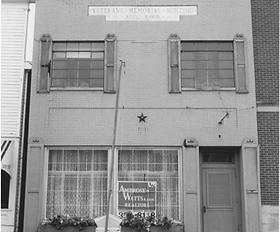
10. Veterans Memorial Building
The War Memorial Building stands on one of the most historically significant sites in downtown West Branch. Long before the current structure was built, this property was home to a Quaker boarding school established in the 1880s for children of the Osage Nation. The school reflected the Quaker community's missionary work among Native American tribes, bringing students from present-day Oklahoma to West Branch to receive an education. The school operated here for only a few years before the property returned to private use.
Following World War II, local veterans raised funds to construct the War Memorial Building as a lasting tribute to those who served. Completed in 1948, the building became home to West Branch's Post Office, while the American Legion occupied meeting rooms in the basement and second floor. For decades, it served as both a civic gathering place and an important public building in the heart of downtown.
Like many historic Main Street buildings, its purpose evolved over time. The building has housed an antique shop, a bed-and-breakfast, and most recently the workshop of internationally respected classical guitar maker John H. Dick, whose handcrafted instruments have been played by musicians around the world.
Today, the War Memorial Building represents multiple chapters of West Branch's history—from its Quaker roots and Native American educational efforts to its post-war civic pride and continued tradition of craftsmanship and small business.

11. The Old Bank
In 1877, West Branch State Bank constructed a two-store building after outgrowing the one-room bank across the street. By 1916 they again outgrew the location again and razed the building to construct the "new modern building" that still stands today. It was known for it’s well-equipped ladies’ restroom and lounge, popular meeting places for women while waiting for the men to conduct business in town.
Today the building is still known locally as the “Old Bank” and currently houses a variety of professional offices and co-working space.

12. Opera Block
West Branch experienced a building boom beginning in 1895, during which several brick commercial blocks were constructed. The Opera Block, built by Charles Macomber, was the largest of these.
A shortage of bricks reportedly slowed the construction of this building (and many more) during this time of rapid growth and construction. This project prompted J.E. Steer lumberyard of south Main Street to invest in a 8,000 pound brick machine that was powered by two horses and could turn out 15,000 bricks a day!
The first floor of the Opera Block was divided into three spacious commercial rooms and top floor included a 500-seat opera house on the building's north end and a Masonic Lodge on the south end. The first storefront tenants includes Morris & Sons (hardware store), Model Clothing House (clothing store), and Dean, Ball & Co. (grocery store).
The opera house itself ignited strong feelings from the community with mixed emotions about having a performing arts theatre in town. Many felt the opera house, "like whiskey and gambling, were helping to unravel the moral fiber of local youth". Others defending that "nothing presented would be classed as unchaste or immodest" and over time the community came to respect the new institution. The theatre was often booked for piano and vocal recitals, fund-raisers and traveling drama troupes.
In 1986, the Opera Block underwent significant restoration to preserve its distinctive brick and iron façade. By that time the opera house and Masonic hall had been remodeled into apartments. Decades later, in 2020 a Main Street Iowa Challenge Grant provided funding for further preservation and restoration work, ensuring the building’s historic character would endure.
Today, this two-story brick structure remains the largest commercial building in West Branch, a lasting testament to the town’s growth and architectural heritage.

13. Leech-Gruwell Building
When a nine-car "parade" was spotted chugging down Main Street in the fall of 1908 it convinced Albert (Bert) Leech that these was money to be made in the blooming love affair between the most prominent West Branch citizens and the new automobile. By early 1909 he has converted an old grocery building into an auto garage and by 1911 he bought this very lot and took on Harry Gruwell, a mechanic, to erect an up-to-date garage. The two accepted a big of $6,300 to build the two-story brick building that still stands today! Leech and Gruwell sold and repaired automobiles on the ground level and the local Masons relocated their lodge, rooms, library and kitchen to the second story of this new building.
When the building was added to the National Register of Historic Places in 1987 it was home to Rex Hardware, the last in a series of stores that sold hardware and furniture after Leech's garage closed. The second story Masonic temple and lodge rooms were then vacant but intact. They were later converted into upper story apartments.
In 1988, the Leech-Gruwell building became home to Herb & Lou’s, a fresh-made pizza restaurant and full service bar, named in honor of former President Herbert Hoover and First Lady Lou Henry Hoover. Herb & Lou’s continues to operate at this location today as a regional favorite.

14. Leech Brother's Building
Built in 1912 as the final infill building on N. Downey Street by brothers Ross Leech and Dr. L.J. Leech as rental property. It was first home to a widely celebrated men's clothing store (noted as "gent's furnishings" in the local paper) owned and operated by Charles Schroeder. The building and store was celebrated as being an elegant up-todate store room equal to those found in cities of 15,000-20,000 inhabitants, with all the conviences and benefits of large city gents furnishings trade. Schroeder was in business here for many years and the building later housed a series of furniture and hardware stores, an antique store in 1980's and is currently Rock Valley Physical Therapy office.

15. Citizen's Savings Bank 2.0
Built in 1908 to accommodate the quickly growing demands of local banking, this building was built by the Citizen's Saving Bank during the "gold Era of American Agriculture". Many obstacles caused delays in construction (add more details here). The ground level was the bank, including a 7,500-pound Mosler safe which is still there today. Second floor was occupied by a doctor, a dentist office and insurance & loan business.
The Citizen's Savings Bank remained in this location for 25 years, even surviving the post-war collapse of farm prices. The bank was absorbed by the West Branch State Bank (across the street) during the Great Depression.
The building later became the office for insurance agencies and the upper floor was a funeral home complete with a casket elevator. Today the upper level is a unique Airbnb property where guests from all over the world can enjoy a stay in historic downtown West Branch.

16. Rich & Bailey Block
Constructed in 1895 by Dr. J.I. Bailey, a longtime local physician, and F.B. Rich, a general store proprietor, this distinctive wood-framed building has witnessed many transformations over the decades.
Fun Fact: The building’s unusual façade—with its dual entrances and contrasting window styles—creates the illusion of two separate structures. This was an intentional design choice, reflecting its origins as a joint venture between two prominent businessmen. The result is a rare and architecturally significant example of late 19th-century small-town commercial design.
In 1974, it was home to the Country Store, a popular local business. By 1989, the structure faced demolition, but a dedicated group of community members rallied to raise funds for its preservation and restoration—ensuring that this architectural landmark remained part of West Branch’s historic downtown.
Today, the building houses Roots Salon & Spa and Kate & Alivia Boutique. Its current owners were awarded a Main Street Challenge Grant to complete a major exterior restoration project from 2023-2025, honoring the building’s original craftsmanship.